Before We Built a Resume Builder, We Asked Whether a Resume Was Even the Right Thing to Build
Before building a resume builder for young job seekers, we asked whether a resume was the right thing to build. The answer changed the product.
Matthew Stublefield
7 min read
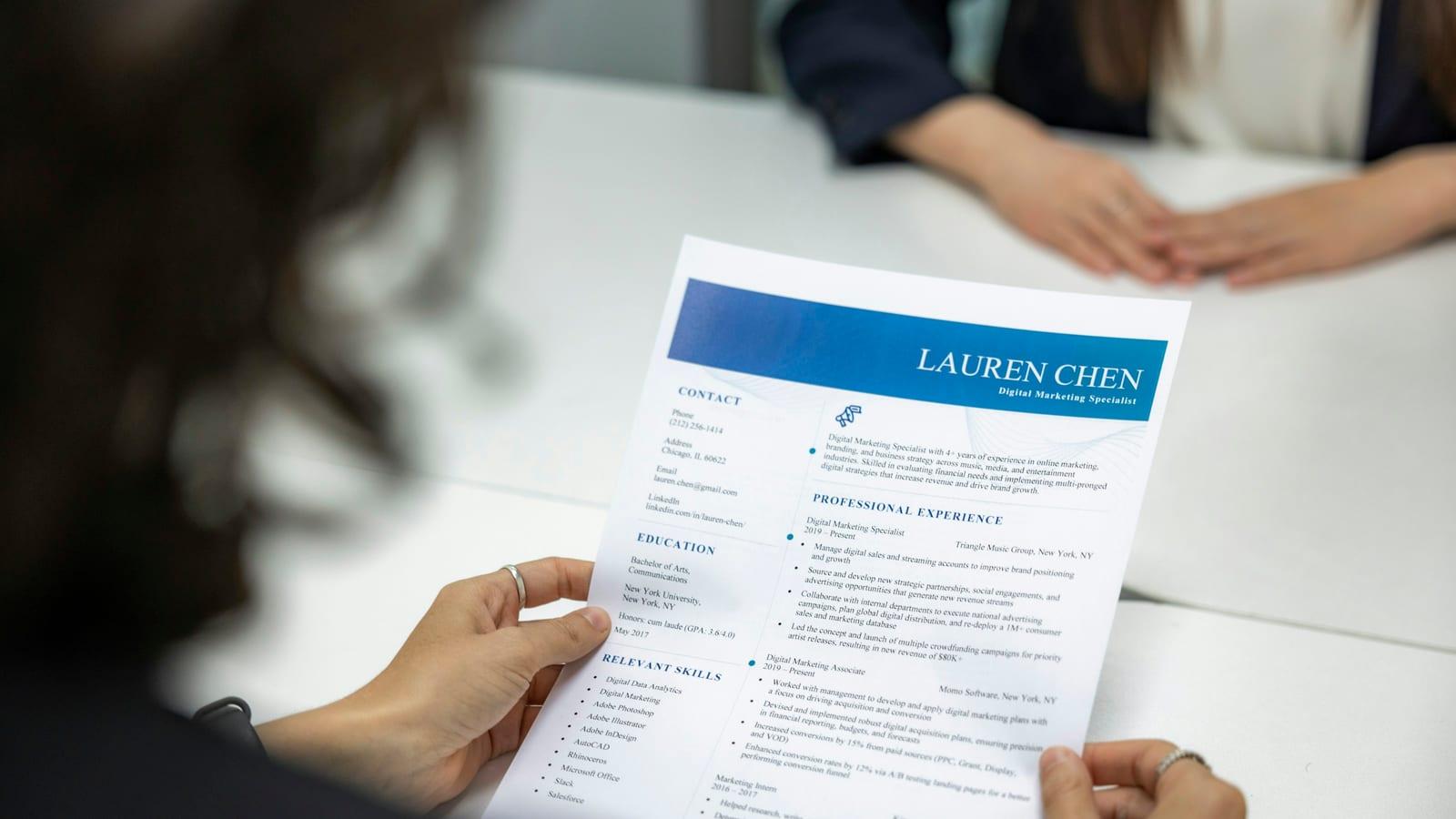
Tallo's resume builder worked, in the sense that a student could build a resume and download it. Then the resume just sat there. The builder read the student's Tallo profile once, when the resume was created, and never looked at it again, so a change in one place never showed up in the other. Getting the finished resume onto their profile meant downloading the file and uploading it again by hand, and most of the students who built one never made it through that last step.
I owned the research, strategy, and prioritization for the new resume builder, along with the roadmap and the epics behind it. Before writing any of it, though, I wanted to answer a more basic question. For the people Tallo serves, is a resume even the right thing to build?
That question turned out to be the most useful one in the whole project, and it's one most product teams skip, because by the time a feature has a name, everyone in the room has already agreed it should exist.
Start with the artifact, not the feature
Tallo's career starters are 18-to-20-year-olds who skipped college and are applying to frontline and early-career jobs. A lot of them can't name what they're good at – someone who's run a register for two years doesn't think of that as a skill – and plenty have learned to treat any tool that asks for their information as a possible scam. Resume builders are also a crowded category, and one developer wasn't going to out-build companies that do nothing else.
So underneath the feature question ("how do we build a better resume builder?") sat a more basic one: does a resume do the job these users need done? If the answer was no, every template and editor improvement would be polish on the wrong object.
I ran a desk-research project across nine threads to find out. It covered how frontline and hourly hiring actually works, how applicant tracking systems read resumes, file versus link versus structured data, which formats employers can ingest, the evidence for tailoring a resume to a job posting, teardowns of AI resume builders and auto-apply tools, and platforms built for job seekers without degrees. Every claim got a fact-check pass before it went anywhere near a decision.
The answer was "sort of," and the nuance mattered
The biggest finding was a split by job tier. For the frontline jobs these users apply to now, the resume barely matters. Large employers of hourly workers route applicants through structured forms that ask about availability, distance, and work authorization, and resume polish ranks well below all of that. When the nonprofit Upturn applied to hourly jobs for its 2021 "Essential Work" report, almost every application asked for availability, and only two employers told applicants which shifts were actually open.
The hiring research points the same way. A 2022 review by Risavy and colleagues argues that application forms make a better first screen than resumes, and notes that job experience and years of education – most of what a resume shows – are two of the least valid predictors of job performance among the screening criteria employers commonly use.
But for the roles these users will grow into, the resume file is still the gate. Someone working shifts today who wants an office job in a few years is going to need one. So a resume builder for this audience has to serve the job they want next, not just the one they're applying to this week.
The second finding was that the friction wasn't document quality at all. It was typing the same information in again and again, and it showed up in every thread. In iCIMS's 2025 survey of frontline hiring, 60% of frontline workers said they'd started an application and not finished it, and half of them said the forms were too long or took too much time. Tallo's download-and-re-upload step was one small instance of a pattern the whole category had.
The file is an output, not an input
That second finding changed the architecture. The principle the program was built on is that the file is an output, not an input: the profile is the source of truth, and the resume is one view of it. I wrote it into the first epic in almost those words: a resume isn't a separate thing a teenager should have to keep in sync by hand.
A file-first builder with better templates would have been the obvious move, and it would have polished the part that mattered least while leaving the thing that actually stopped people – re-entering their own information – exactly where it was.
This is what I mean when I say a cheap yes leads to an expensive no. "Yes, let's build a better resume builder" costs nothing to say in a planning meeting. The expense shows up months later, when the thing ships clean, nobody's behavior changes, and the team has to work backward to figure out why.
Research also tells you what not to build
The same research set limits, and several of the most important decisions were about what the product would never do.
Tailoring a resume to a job posting has decent evidence behind it for structured office and professional roles and no controlled evidence at all for frontline ones. So the writing help the team planned would amplify the student's own words, in the terms recruiters search for, rather than write new ones for them. Job titles stay fixed, "because a title is a fact and changing it edges toward a lie."
The competitive teardown made the differentiator easy to see. Many popular builders let you build for free, then put the download behind a trial that auto-renews, assume a degree in their templates, and work best on a desktop. For an audience without degrees, mostly on their phones and quick to spot anything that feels like a trick, that turned into a few simple rules: every export is free, the download always works, and there's no paywall on the way out.
The cuts were deliberate, too. There's one template that applicant tracking systems can read, instead of styling options. There's one resume on the profile, with other versions kept as drafts. And there's no auto-apply, because the research showed returns drop off once someone is spraying applications everywhere. Every one of those is a feature somebody could reasonably have asked for, and knowing which ones not to build was worth as much as the roadmap.
Order the work by dependency and risk, not excitement
I structured the work as three epics, each behind its own feature flag so the team could turn them on independently:
- Connect the resume to the profile. The resume fills live from the profile, and edits can go back to the profile one field at a time – always confirmed, never silent.
- Import an existing resume. A student uploads a PDF, a Word file, or a photo of a printed resume, corrects what was read, and gets a private draft. Nothing reaches the profile until they choose to commit it.
- Say it the way employers search. Suggestions that work the student's skills into their own descriptions, with accept, keep mine, or edit on every one.
The third is the most interesting feature and the clearest differentiator, and it went last. It's also the riskiest, since the tailoring evidence doesn't exist yet for frontline roles, and it only works on a profile that has something in it. The first phase makes the profile the source of truth the other two depend on, and the second fills thin profiles, because a live view of a sparse profile is a sparse resume. So the exciting part became a measured pilot instead of the launch.
Each phase also got one make-or-break metric. The step from building a resume to putting it on the profile wasn't being tracked yet, so instrumenting it was part of the first phase's scope rather than an afterthought. You can't learn from a launch you can't measure.
I groomed the first phase with engineering and design, and then another PM took over execution so I could move on to the next major initiative. They inherited the research, the reasoning behind every phase, and a backlog that explained itself, and pieces of it are already live in Tallo, like uploading an existing resume.
The question to ask before a feature has a name
Most teams I work with are good at "how should we build this?" They have designers, engineers, and a process for it. The question that tends to go unasked is the one before it: is this the right thing at all, for these people, given how their world actually works?
In a B2B product the artifact usually arrives with a customer's name on it – a report, an export, an integration, a mobile app. The customer is describing the thing they can picture, and a customer's first answer is usually a solution, which isn't the same as the job they need done. Build it as asked and it ships clean. When features ship and the metrics don't move, this is very often where the gap started: an artifact everyone assumed and nobody checked.
You don't need nine research threads to ask the question. You need someone willing to hold the feature idea loosely for long enough to check whether the artifact itself is right, and a team willing to hear "sort of" as an answer. At Tallo, "sort of" turned a resume builder into a profile that can produce a resume, and that's a different product.
More Field Notes
- Consulting Operations
Kagi Stopped Building Orion for Windows. Narrowing a Bet Is a Strategy, Not a Retreat.
Two software companies pulled back from a market and a beloved product in October. How to tell a deliberate narrowing from a quiet stall.
- Consulting Operations
'300 Million People Is a Big Market on Paper.' Envision's Shutdown Is a Lesson in Market Sizing.
A market sized by everyone with a problem tells you little about a business. Envision's founders said so about their own 300-million-person market.
- Consulting Operations
Two-Thirds of Software Growth Now Comes From Existing Customers. Retention Just Had Its Worst Year.
Software companies lean on existing customers for most of their growth just as retention weakens. What that means before you bet on a new market.



Want help running a sharper practice?
The reading and synthesis behind your client work, handled – a living deliverable kept current, so more of your time goes where your name is actually on the line.