Why Your CRM's AI Doesn't Know When a Client Is at Risk
Generic CRM AI flags at-risk consulting clients correctly just 41% of the time. Here's why that gap exists and what the firms hitting 79% built instead.
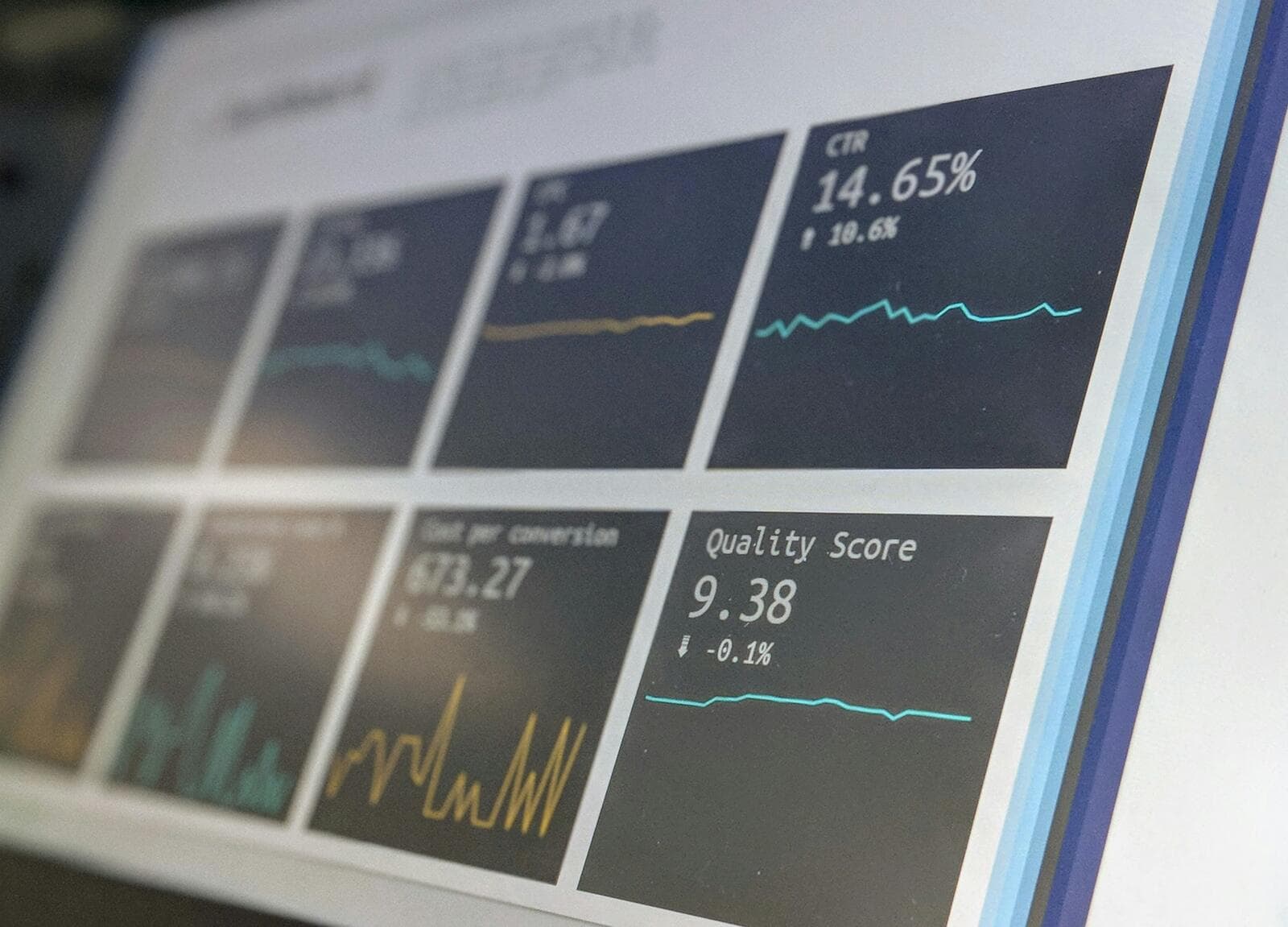
Off-the-shelf CRM tools correctly flagged at-risk clients 41% of the time. Firms using models trained on their own engagement data hit 79%.
That 38-point gap comes from arete.so's 2026 analysis of 430+ mid-market professional services firms – currently the only primary dataset isolating this question specifically for consulting and advisory practices. If you're relying on your CRM to tell you when a client relationship is in trouble, you're getting a wrong answer more than half the time.
Your CRM isn't failing you. It was never designed for the work you're using it to do.
The architecture mismatch
CRM platforms are built for pipeline velocity. They track touchpoints, log calls, score leads, and move opportunities through stages. That architecture is excellent at what it was designed for: managing a high-volume sales process where deal health is measurable in activity frequency and response rate.
Consulting client relationships don't operate that way. A client who hasn't responded to email in two weeks may be heads-down on an internal initiative, completely satisfied, and planning to expand the engagement. A client who responded to everything last week may have had a board meeting Wednesday that quietly shifted their priorities – and they haven't figured out how to tell you yet.
The signals that actually predict risk in a consulting relationship – engagement depth, decision-maker dynamics, delivery satisfaction, strategic alignment – are relational and contextual, not transactional. CRM systems weren't built to track them, and the AI layer on top of a CRM can only read the data the CRM captured. Arete.so named the gap directly: "A CRM alert that fires three weeks after a client has already mentally moved on is not a retention tool. It is a documentation tool." (AI Customer Retention for Management Consultants: 2026 Guide, Arete Intelligence Lab, April 2026)
One client, one miss
Bain & Company research (Reichheld & Sasser, Harvard Business Review, 1990) established that a 5% improvement in client retention rates produces profit increases of 25–95%, depending on the service model. The wide range reflects variation across industries; the directional logic has held across decades. Losing a client is far more expensive than keeping one.
In boutique advisory, that math is concrete. Arete.so estimates that losing one mid-tier consulting client erases $180,000 to $400,000 in annual revenue. One client. One undetected signal. One missed window.
At the scale most boutique advisors operate – fewer than five concurrent engagements at any given time – you don't have much tolerance for quiet departures. The irony is that practitioners at this level usually know their clients well. They're not inattentive. They're just reading relationship signals through a system that was never designed to surface the signals that matter.
What the 79% built instead
The firms in arete.so's cohort that achieved 79% accuracy weren't using better CRMs. They were using models trained on their own engagement history – meeting patterns, delivery context, relationship signals, milestone timing – rather than on generic pipeline activity.
That distinction is the whole thing. A generic CRM model learns from aggregate patterns across thousands of companies, then applies those patterns to your relationships. A domain-trained model learns from your engagements, your clients, your delivery cadence, your history with this type of client in this type of situation. They answer different questions. One asks what typically predicts churn at companies like yours. The other asks what predicts risk in your relationships, given how you work.
For a practice with three to five concurrent engagements, that second question is the only one that matters. You're not running a volume business – you're running a relationship business where each engagement is high-stakes and individually distinct. The intelligence layer protecting those relationships needs to know the texture of your work, not just that a client skipped a weekly check-in.
This kind of intelligence doesn't require you to build a machine learning infrastructure. It requires access to a synthesis capability that already understands your engagement history and relationship context – one that can surface early warning patterns before they become exits, rather than documenting exits after the fact.
The question worth asking
AI can help with client retention. The useful question isn't whether it belongs in this part of your practice. It's whether the AI you're using actually knows your clients.
A 41% accuracy rate means your CRM's at-risk alerts are wrong more often than they're right. That's not a system you can rely on for early warning. That's a system that creates the appearance of intelligence without the protection of it.
The firms capturing 79% accuracy aren't better at reading their CRMs. They have a different kind of intelligence – one built on their own engagement data, their own relationship signals, their own history. That's what makes it accurate. And accuracy is the only thing that makes it worth having.
If you want to see what client health intelligence looks like when it's built on your own engagement history rather than a generic model, email matthew@fieldway.org.
Related: Your Pipeline Is Healthy. Your Calendar Is Lying to You. | The 70% That Gets You to Your Best Work
More from Managed Intelligence

How Stanton Ridge Raised Its Proposal Win Rate from 31% to 44%
A boutique strategy firm cut proposal time from 16 hours to 5 and raised win rate from 31% to 44%. The variable wasn't the AI tool — it was what they fed it.

The Consulting Firm AI Margin Gap Has Nothing to Do With Tools
The 2026 SPI benchmark shows a 17.9% vs. 6.0% EBITDA gap. The difference isn't which AI tools consulting firms use — it's what's organized underneath them.

The 30-Client Plateau Is a Knowledge Problem, Not a Headcount Problem
When boutique advisory practices hit the capacity ceiling, most reach for headcount. What we see consistently: it's a knowledge problem, not a bandwidth one.
Drowning in client documents?
I read and synthesize them behind the scenes, in your house style, so you stay the face of every engagement and your hours go to judgment instead of extraction.
See how this works for advisors